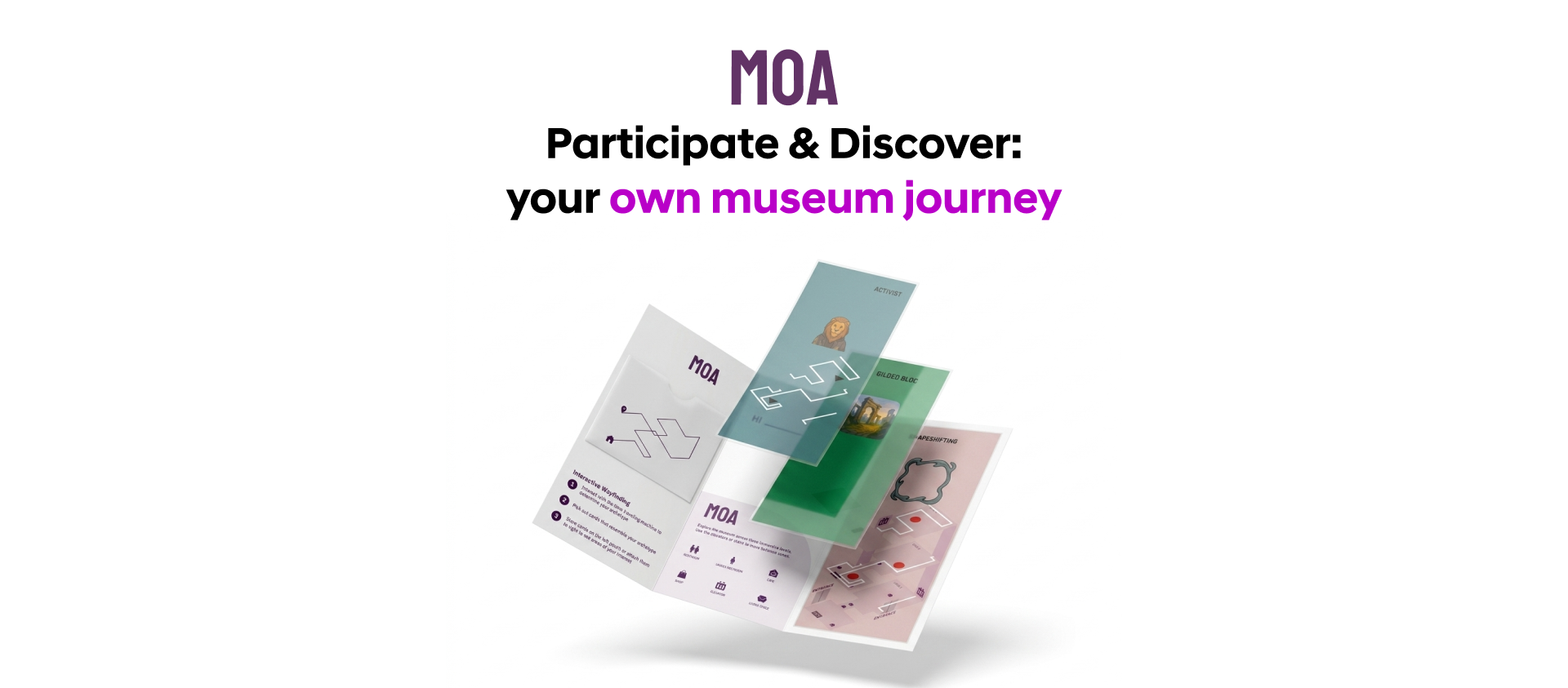
Participate & Discover: Your own museum journey
Overview
Walking into a large, unfamiliar museum can feel overwhelming. With so many paths, so many things to explore, and no clear route to chart. Some visitors arrive with a loose intention of seeking inspiration, reflection, or self-discovery, while others are simply wandering and looking to be surprised. Regardless of purpose, most visitors are here with a clear yet somehow fuzzy intent.This project began as a personal, independent study at the University of Michigan School of Information, where I set out to understand the relation of art museums with people. So I developed an interactive, gesture-based installation that discovers your persona and maps it to a custom journey through the museum.
As the sole contributor, I...
- Conducted 10 guerrilla interviews with visitors at UMMA
- Designed and deployed a survey (29+ responses) mapping visitor interests to art themes
- Analyzed survey data using Python scripts to identify preference correlations
- Reviewed existing literature on participatory design and interfaceless interactions
- Developed an gesture-based interactive demo
Background
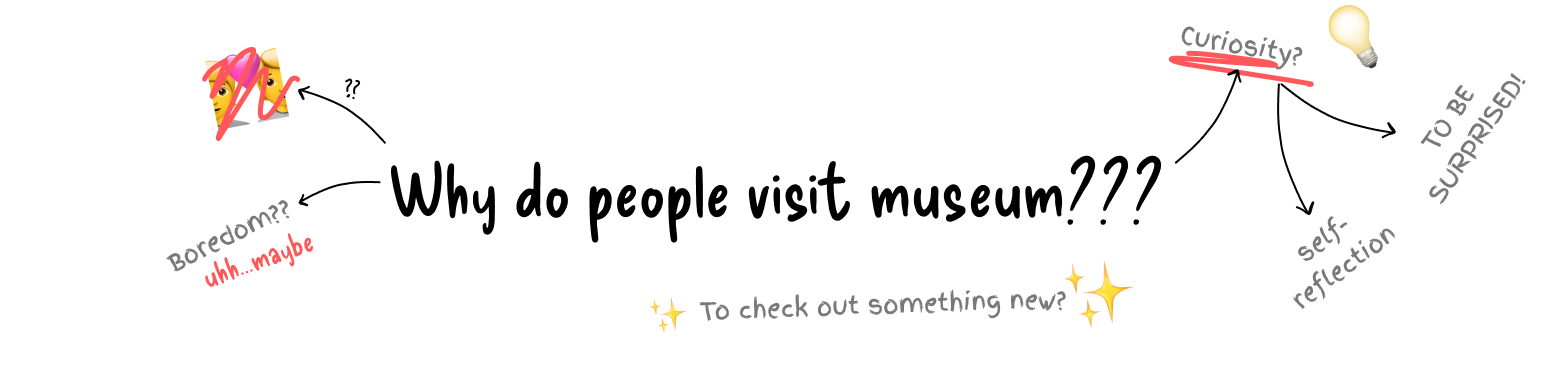 Museums often present navigational challenges, and visitors have different interests, learning styles, and comfort levels with technology. Traditional wayfinding involves printed maps, audio guides, mobile apps which either require devices or fail to engage them in a meaningful way with the curated art. From my personal curiosity that started with the question "Why do you go to museum", I went on to research different ideas and questions
The Real Problem
Through 10 guerrilla interviews with UMMA visitors and a survey with 29+ responses, I discovered that visitors exhibit a lot of different intents like looking to learn more about history, or just an open exploration or check new things out. Things did not make a lot of sense and since art is subjective, I decided to view it from another lens. I viewed it as people coming here for art literacy to learn new things, to be left awestruck by its wonders. When viewed from this POV, I was able to frame the problem as helping people find their interest.How can I assist visitors in finding their interests through engaging interactions to deepen their art literacy?
Solution
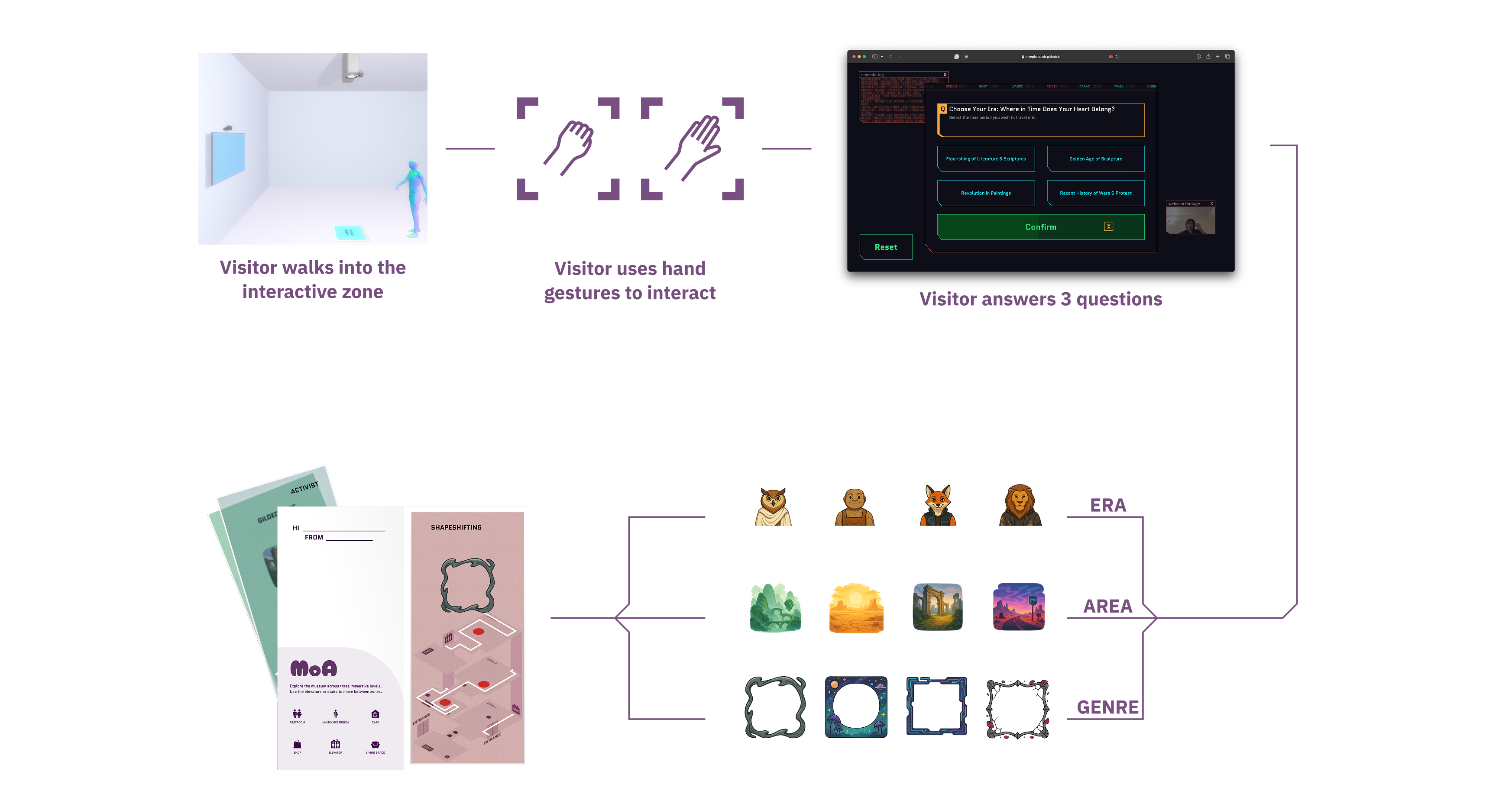
After conducting literature review, interviews, and survey analysis, I ideated different interactions, ideas and landed on a time-travel based theme which I validated using Python scripts to analyze the survey data and identify correlations between visitor interests and art themes. I then developed a gesture-based interactive demo using MediaPipe, JavaScript (started with touch designer but later transitioned to a web-based approach). The installation features a large screen with a dynamic questionnaire. Visitors can interact through gestures to select their preferences, which then maps to a personalized museum journey. The demo included visualizations of art pieces and an interactive prototype for suggested paths based on the visitor's interests.